
I2M

About I2M
Posts by Tania Swift:
Play-Based Practice: Where to begin
Recently I have been asked to talk about how to develop a play-based practice in school quite a lot, but generally in short sessions and as there is so much that those who work with children in the early years can do, it got me thinking about some simple ways to get started.
Movement and Play in the early years is so important as it supports children in many ways, such as helping them to:
- Think creatively
- Develop problem-solving skills
- Develop language
- Develop social skills
- Learn about the world through real world experience
- Develop higher level thinking
- Develop Executive *Function* Skills & Self-Regulation
Some simple ways to start is to make some adjustments to what you already do.
Create an Enabling Environment
When children feel, safe, secure and happy in an environment that responds to their individual needs they are more likely to feel comfortable to try something new, push themselves and on the whole, relax into enjoying their day and the challenges they may face. They will then be open to new experiences and allow themselves to be challenged physically, emotionally and cognitively. When creating an enabling environment, start by thinking about your relationship with children and how you can make them feel safe and secure.
Get Creative with Resources and Material
Provide natural resources, use as many open-ended resources that you can, get parents and carers involved and ask them to donate resources and natural resources that they may already have. Ensure you rotate resources, encouraging children to be open to new experiences.
Teachable Moments
Before looking at changing the environment or resources, we can start with how we communicate with children. Ask questions, rather than give instructions, which may lead to conversations, providing children with the opportunity to develop their language and communication but also get them more involved in their learning. Ask questions and create conversations. If a child needs help, if we ask them questions about what they are doing, what has happened and what they think they could do differently to make it work, will provide many opportunities for the child to learn and develop. During these interactions, they will need to:
- listen and understand your question
- use their communication skills
- use their language skills
- problem solve.
Ongoing Communication and Role-modelling
Think about how you communicate with children as you will be modelling communication and language but also how you speak to others can have a huge impact on your relationship.
Child-directed Play
If we take a moment to observe children during child-directed play, we may find that they are learning and developing in so many more ways than we might realise.
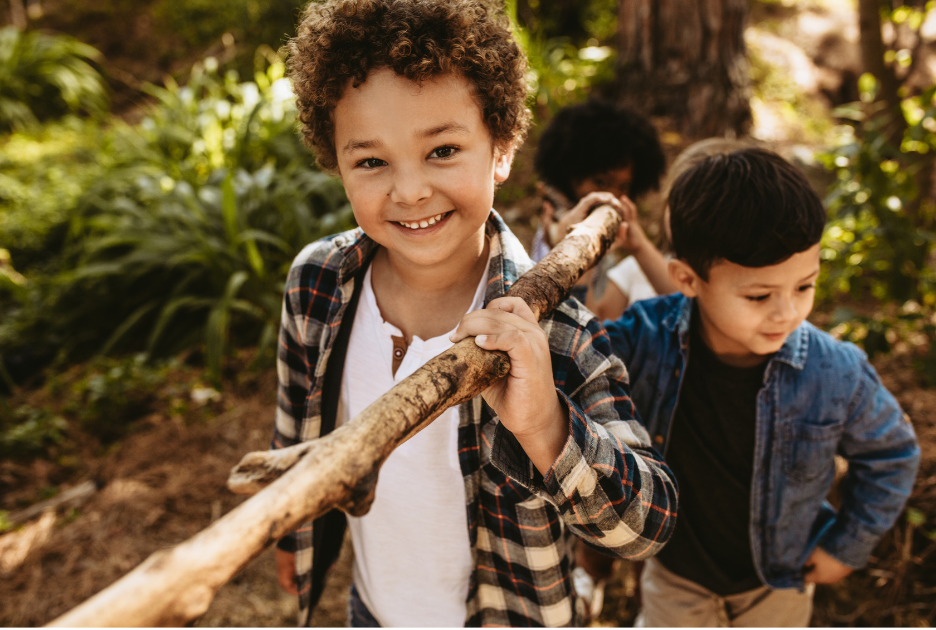
When children are engaged in activities, on their own, in pairs or in a group, they develop holistically, for example, some of the ways children may be learning and developing when they are building a den:
- they are having to communicate with each other as to what is needed, how they would like it to look and who is doing each task – CLL
- they have to figure out what size it needs to be, the measurements of the structure, how many sides it has and the height – Mathematics
- they use their imagination and creativity to turn the den into castles, dragon’s dens, towers, ships, etc. They will learn how to use different materials to build, how malleable and inflexible materials fit together and use of materials and objects to decorate their den – Expressive Arts and Design
- they will be learning to share, take turns, respect each other, etc. Through playing with other children and playing enjoyable games in groups or pairs, children are learning social skills. They are also learning that making mistakes is ok, supporting the development of resilience – PSED
- they are learning about animals and bugs, plants, forces, the environment, the weather, seasons and different natural materials – Understanding the World
Making small changes in how we see things and our own actions can sometimes be a lot more effective than making big, possibly expensive changes.
Stick to the Routine
To watch the accompanying information video go here
Imagine spending your day not knowing what is going to happen and getting pulled in different directions at any given moment.
Well, this is often the reality for young children. They wake up and literally don’t know what their day has in store for them. Creating a routine in “normal” times is very beneficial for your young child, however, now more than ever, it will make a huge difference to your child’s day as well as yours.
Creating a Routine
A lot happens in a child’s day so a bit of consistency and routine will help them relax and feel more capable.
Creating a routine that suits your child’s needs can be easier than you think. Take your cues from them:
- They may need a mid-morning snack at a similar time each day
- They may be energetic at particular times of the day and a bit sleepy at other times
- Create a calming sleep time routine
- Have meal routines
- Ensure there is a lot of playtime, however young children can only focus on one activity for short periods of time so refer to the Enabling Environment blog for tips on setting up different areas at home
- Allow for flexibility, i.e. when you need to do something that doesn’t fit with their snack time, make sure you have a fabulous snack at hand to avoid “hangry” outbursts
Creating a Schedule
Firstly, it would be great for your child to learn to understand what is coming next, happening on that given day, when something has to end, etc.
Instead of just expecting your child to move away from something they are enjoying to do something else, for example, having to stop playing in the garden to have dinner, prepare them for the transition.
Create a large daily routine chart. Use what you have at home:
- A whiteboard
- A cork board
- A large piece of paper (or many pieces of paper stuck together)
- Get creative
Create sections for different parts of the day and explain what this is and how it will work to your child.
Have something that can signal the change is time:
- An arrow or a pointing hand (perhaps you can create this with your child. A cut out of an outline of their hand pointing)
- Pin it to the cork board, BlueTrack to the paper or whiteboard, etc.
- Move the hand to the next section when it is nearly time for the next part of the day
You can make it as detailed or not as works for you, the important thing is your child has a plan for the day. You can, of course, be flexible when needed but it’s good to try stick to the routine as much and as often as you can.
To get you started, here is an example schedule:
- 7am Wake up, play in your bedroom
- 7.30am Breakfast
- 8am Get dressed, brush teeth
- 8.30am Read books and play
- 10am Morning snack
- 10.30am Physical activity and play
- 11am Arts and crafts
- 11.30am Listen and dance to music
- 12 pm Lunch
- 12.30pm Clean up
- 12:45pm Nap
- 2pm Read books and play
- 2.30pm Afternoon snack
- 3pm Physical activity and play
- 5.30pm Dinner
- 6pm Clean up
- 6.15pm Play
- 7pm Bath and brush teeth
- 7.30pm Change into pyjamas and story time
- 8pm Sleep time
Benefits of Creating a Schedule
It really is worth putting in some time to create a routine and within a few weeks you will see many benefits.
Benefits #1 – Confidence
With a routine your child will be able to go about their day without worry. Knowing what will happen will be comforting and allow them to explore, try new things and feel happy and secure. They will start to do more for themselves and feel a bit more in control of their world.
Benefits #2 – Less Meltdowns
There are many reasons why a young child will have a meltdown- they could be tired, hungry, overwhelmed, worried, confused, and the list goes on.
Taking some of these issues out of the equation can have a hugely positive impact on your child’s day. If they are aware that it won’t be long until they will have a snack, they will learn to hold on for longer. If they are aware that they will have to stop their fun game in a few minutes, as it is time to go to bed, will prepare them for the transition.
Benefits #3 – No more Bedtime Battles
Once a child has become accustomed to a particular series of events before bedtime, they will settle down much easier and sleep better and possibly longer. Hence, a calm bedtime routine is important for young children. In fact, it’s beneficial for all of us, no matter what age.
Benefits #4 – More Flexible Children
Young children with a routine have been shown to adjust better to stressful situations. They will potentially be more confident, feel more safe and secure and through better sleep routines, not be cranky due to lack of sleep. They will therefore be better at adapting to a small change in their day or a large change in their world.
Benefits #5 – Easier Life
When your child is calm, more confident and independent, you will invariably find the day easier. Dealing with your child’s meltdowns are exhausting, having to constantly respond to their on-the-spot demands is exhausting, not sleeping enough at night due to bedtime battles is exhausting.
Creating a routine, especially during lockdown, is clearly a win-win situation so why not give it a try.
Risk Taking and Risky Play
To watch the accompanying information video go here
Challenges and risk taking are important for children to develop physically, socially, and even cognitively; though the outdoors offers many opportunities for this, risk taking can take place anywhere that a child needs to push themselves or try something new. Children will be more willing to take risks and attempt new challenges if they feel they are supported by the adults who care for them and are in a safe and secure environment. They also need to learn about being safe, as well as respecting the environment and people around them.
Why is Risk Taking important?
- Children develop physically, cognitively and emotionally through risk taking.
- Risk taking in a controlled environment will help children to make better decisions when they are not within the safety of their home, a school or an early years setting.
- If children are not exposed to risk taking in a safe environment they are exposed to another kind of danger, they may never learn to assess risk and their own ability. Some children may become timid, never taking valuable risk, whereas others may make foolhardy decisions, potentially coming to harm.
- Risk taking not only helps children to grow and develop but also encourages children to be creative, develop their social skills as well as playing a part in the development of resilience. If a child learns to take chances, fail and try again they will learn to face many challenges and barriers in their lives with a positive outlook.
What is Risky Play
According to Norwegian research (Hansen Sandseter, 2007):
HEIGHTS
Play with heights where children can be at risk of falling and possibly hurting themselves.
SPEED
Play with high speed where children can lose control which may lead to them colliding with others or into other objects.
TOOLS
Play with harmful tools where if children are not taught safety they can be harmed by them.
ELEMENTS
Play near dangerous elements where there may be a possibility of injury from the elements or they may fall into, such as a river.
ROUGH AND TUMBLE
Rough and tumble play where children can be harmed by each other.
DISAPPEAR/GET LOST
Play where children can disappear/get lost and possibly come to harm due to lack of adult supervision and care.
| Benefit | vs | Risk |
| acceptable (good) risk taking | unacceptable (bad) risk taking | |
| ||
Weighing up the balance between risk and benefits
- Develop your knowledge and confidence to provide positive risk taking as this involves a level of personal, yet informed, judgement
- Learn how best to communicate with children when they are challenging themselves, i.e. do you ask children questions rather than tell them to do something, do you provide a safe, secure environment to encourage children to push themselves
- Do you know when to communicate with children and when to allow them to concentrate on the task at hand?
Risk and additional needs
It is even more important that children with disabilities are provided the opportunity to take risks. They may not have the freedom and be able to make as many choices as able-body children and often have many things done for them in everyday life due to safety or easy for their parents or carers.
Children with physical disabilities are not always able to seek out their own challenges so it is important to enable them to do so, e.g. take them to the climbing equipment. They might only be able to pull themselves up one rung, however the sense of achievement could be the same, if not greater, as the able-body child who reached the top!
Bad Risks and Hazards
Bad risks and hazards are those that are difficult or impossible for children to assess for themselves, and that have no obvious benefits. Examples of bad risks are sharp edges on equipment, structures that are weak and objects that can trap children’s fingers, heads or other body parts.
Assessing the Risk-Benefit Balance
Risk assessment evidences that you have identified and eliminated unacceptable risk to children and allowed for acceptable risk as opposed to eliminating all risk.
According to the Managing risk in play Provision Play Safety Forum statement, there are 3 factors central to determining whether or not the risk is acceptable:
- The likelihood of coming to harm
- The severity of that harm
- The benefits, rewards or outcomes of the activity.
When considering the safety of an environment, always consider legal requirements as well as acceptable risks. Consider where the risks will be and then what measures you can put in place to minimise the risks, such as falls from climbing equipment are possible, however the possibility of coming to harm will be reduced if hazards such as windows and sharp objects are nowhere near the equipment, as well as if you discuss what children are doing with them.
Equipment
Climbing Equipment/Trees
- Do not touch children when they are climbing, if they cannot climb unaided then they should not climb higher. This will allow them to climb as high as they are capable and can prevent them from getting stuck or being unsafe. Children are more likely to fall when being held by an adult than if they are climbing on their own.
- Find a balance between leaving children to get on with the task unaided and providing verbal or physical support.
- Ask children questions about how they feel they are progressing rather than telling them how they are doing. This develops self-regulation and confidence in their own ability.
- Allow them to concentrate, avoiding speaking to them unnecessarily (telling them to be careful or watch what they are doing will distract them and could lead to them falling or hurting themselves).
- Give children the opportunity to make their own low climbing structures (from wood, tyres, blocks, small tables, etc.). Discuss safety with them.
- When children are attempting to climb structures they are slightly unsteady, ask them to think about whether they are safe and what they could do to make it safer or easier to climb.
Real World Tools
Let children use real china, building tools, sewing kits and knives for cooking. It is important to learn to trust them and if you teach them about safety, there will be a small risk of breakage and accidents. Put into place safety measures such as at first let children use the china over carpeted areas, role model as to how to safely carry china with 2 hands, give them blunt knives and ask them to cut easy foods such as bananas. Be sure to be relaxed about any breakages and accidents.
Using real world tools are very beneficial for children, supporting:
- The development of muscles in hands and arms as well as better control over these muscles.
- Fine motor development when holding a nail to be hammered in and it doesn’t take long for them to learn to keep their fingers out of the way of the hammer.
- Better hand-eye coordination.
- Them to learn about the difference in force when using these tools, rather than always using plastic tools.
- Confidence in themselves as they are trusted to use the same implements as adults. If children are not given real world tools and objects to use they will be aware that they are using different implements to adults. Allowing them to use real world tools that are used by adults instils a great sense of confidence.
- Independence and self-discipline. The more opportunities they are given to use real world tools and learn about safe handling of them will lead to them being trusted with more fragile and “dangerous” objects, leading to faster develop of gross and fine motor skills.
Building and Construction
- Place a selection of equipment and recycled objects in the outdoor area that allows children to build their own structures and also encourage the use of natural material (rocks, wood, etc.) for building.
- Allow them to complete as much as they can without your assistance; do be on hand to guide when it appears it has become too challenging or if you feel the risk of harm is high (bad risk).
- Teach them to be safe by asking questions about the safety of the structure they are about to climb or the object they have built.
Teachable Moments through Risk Taking
When children are experimenting, being creative and taking risks, adults will often find they are presented with great opportunities to support the development of the child’s thinking and problem-solving skills if they work with the child rather than just instructing them as to what they should do.
Talking Emotions
To watch the accompanying information video go here
Young children need to be taught about their feelings, helping them to make sense of their emotions. It will allow them to become adults who can express themselves appropriately and regulate how they behave in social situations, as well as become compassionate and empathetic.
Show your Feelings
You don’t have to hide all your emotions from your children, in fact, it is good for them to learn that it is ok and normal to feel sad sometimes. They do not have a lot of life experience so they can learn from yours and it is good to normalise feeling different ways.
However, it is important that when you are feeling sad, anxious, angry or any other emotion that may come across as negative, you explain to your child what you are feeling and why it is ok. Use age appropriate explanations, i.e. you don’t have to tell the full harsh truth, but allow them to understand that you will be ok, avoiding their imagination taking them to all kinds of terrible places.
Through these experiences we are giving our children a life skill and also inviting them to discuss their feelings and emotions.
Emotional Literacy
Emotional literacy was first identified by Claude Steiner (Steiner, 1979), identifying five essential elements:
- Knowing your feelings
- Having a sense of empathy
- Learning to manage your emotions
- Learning to repair emotional problems
- Developing emotional interactivity
Prioritising the understanding of one’s own emotions as well as being sensitive to the feelings of others, leads to healthy relationships and the ability to confident deal with difficult social situations.
Top Tips
- Throughout your day, model and label your own emotions, e.g. “I feel frustrated because I can’t go outside as I have to work, etc.
- Have end of day discussions with your children over dinner that include what made you happy, sad, frustrated and proud of yourself and ask them about their day.
- Play emotions games, e.g. pulling emotion faces, including emotions in active stories, emotion active rhymes or action songs etc.
- Teach your child to label their emotions by asking them how they feel or stating how you think they feel and asking what can be done to make themselves feel better.
- Have discussions about the feeling of the characters in the stories you read to them. Can they guess how the character is feeling? How do they think that makes the character feel? Etc.
- At the start of the day discuss how you feel about the day ahead and what you feel about what you have planned. Ask them about how they feel.
- Slowly add more complicated emotional words to discussions such as surprised, proud, embarrassed, cross, etc.
- Draw faces. This is a great way to teach emotions through a fun drawing activity.
Behaviour and Mental Health
We spend so much time asking children to sit still, be still and stop fidgeting, we sometimes forget that young children need to move to grow, develop and learn. Asking them to behave unnaturally could lead to negative behaviour. How many times while watching a young child playing, constantly on the go, you think “I wish I had that much energy”? They do have boundless energy and if we do not allow them to move, that energy could be channelled elsewhere, often turning into what we would call “bad behaviour”.
Top Tip
Provide activities that help children to understand their feelings, such as role play, active stories and games that include emotions such as happy, sad and angry. Children will find this fun and non-threatening.
Creative play and physical activity also play a role in the development of executive function skills and self-regulation, needed to control our emotions and cope with difficult situations. Through movement and active play children can express anger, be destructive and generally express emotions, especially outside, that are not usually acceptable in most situation. Giving children freedom to express themselves and their emotions will also help them to learn about acceptable behaviour.
Top Tip
- Praise your children. Of course, as adults who care for children, you will find yourself happily praising them on a regular basis.
- When children try to attention seek by behaving in a negative way it is often a sign that there is an issue, such as low self-esteem, feeling worried or lack of positive relationships. Distracting children from this behaviour by praising something else they have done or are doing can diffuse the situation, while reinforcing your relationship. Try to avoid giving them more attention when they are behaving negatively and give them the attention they seek when they are behaving in a positive manner.
- When a child is having a “tantrum” this could be due to the fact that they are feeling emotions they do not understand and which scare and confuse them and, then, make them feel more negative emotions. As much as you may want them out of your sight try to gather them up and hug them. This will hopefully sooth them and diffuse the downward spiral of emotions. Alternatively, find a calm quiet space where they can calm down.
- Encourage children to identify their achievements and to praise themselves.
- Use positive language – be mindful to avoid negative language or use of your voice. Children learn so much more from us than what we teach them.
- Make physical activities, or any other form of activity, engaging and appropriate. If we try to force them to do something they don’t enjoy or that is too challenging they may become frustrated and start to behave negatively.
- Partake in activities and have fun with your children – develop a positive relationship and model good behaviour.
- Have realistic expectations of children. The more you understand their needs, abilities and interests the better.
- Create opportunities for self-regulation through regular risky play.
Natural Development
Examples of how self-directed movement and active play in the early years can help children develop emotionally:
- When children are climbing they will be concentrating, problem solving, learning to believe in themselves and their own ability. They will challenge themselves. When they reach the top or the desired place, they will feel a sense of achievement which will help their confidence grow. Children might become fearful, but if they push forward, with or without encouragement from others, they will develop resilience and discover that they can do more than they thought.
- They will be learning about others and the social world through role play, imaginative play and active stories.
- They will be exploring nature, which can help them feel calm and free to express themselves physically and emotionally.
- They will be throwing and kicking balls and when the ball lands where they intended or they manage to catch it they will feel a sense of achievement.
- They will be attempting obstacles courses and trim trails, which will give them a great sense of achievement and self-worth.
- The opportunities to learn and develop in the outdoor environment is endless. It offers many open-ended opportunities to explore their own ability, create and try new things.
- When building with construction toys and/or natural resources children will need to problem solve, make various decisions and find making mistakes acceptable and part of the experience, which will support the development of resilience.
Independence
Ultimately, we want children to become happy independent adults.
In order to develop independence, they need to learn self-belief, amongst many other skills. Supporting children to feel good about themselves and their abilities, giving them responsibilities and allowing them to learn from their mistakes without making a fuss or trying to fix everything for them will lead to independent young children and, in turn, adults.
Leading or Leaving
To watch the accompanying information video go here
A young child does not learn and develop through instruction, they learn and develop through experience and achieving the goal is not where the magic happens, it happens throughout the process.
The older the child the more they can play independently, and keep themselves occupied. However, no matter the age of a child, if they are stimulated and engaged, they are more likely to be happy to be left to their own devices.
You know your child better than anyone. Use their interests and imagination to make everything more interesting and appealing. Provide an engaging environment (please see this article).
Give your child space to try something new before helping them or telling them how to do it, unless it is unsafe to do so. Ask questions rather than instruct, allowing them to be involved in the process and have ownership of what they are doing, it will help them to problem-solve and use their brain more. Use discussion, redirection, positive reinforcement, and encouragement as guidance.
Movement and exploration is so valuable for young children. When they are playing, they are “working”. Play helps children to:
- Think creatively
- Develop problem-solving skills
- Develop language (though social interaction)
- Develop social skills
- Understand and learn about the world through real world experience
- Develop higher level thinking
- Develop Executive Function Skills and Self-Regulation
Get them Involved
Teach your child to take care of themselves and their home and to help others.
Teach them to help clean, prepare meals, sort shelves and take care of their own belongings and space.
You may need to show them a few times before they can do these tasks by themselves, but at some stage they will be able to do them independently.
Allowing children to partake in tasks that they may feel has value will not only teach them many skills it will give them a sense of self-satisfaction and they will come to see themselves as a valued member of their family / community.
When a child is cooking, playing role-play games such as shop keeper or sorting their toys, they are learning. They will be reading instructions, developing their fine motor skills, problem-solving, developing mathematic skills by measuring quantities or making things fit.
Movement to music and active songs are great not only for physical development but also for language development. Make your nursery rhymes active, creating large, energetic actions for each part of the rhyme and do them together.
Leading
When should you lead your child:
- To allow you to spend meaningful time with your child
- To introduce them to new things and experiences
- To teach them things that they may need help with (e.g. learning to skip)
- If a child seems frustrated with their task or activity, ask them a leading question to help them problem-solve and come up with a solution (i.e. what do you think you can do differently, what else can you try, do you think if you did it slightly differently it may work?)
- If your child is engaging in a sedentary activity for too long, ensure this is broken up with a more energetic activity that you either lead or that you know they will enjoy
- Set up an activity that piques your child’s interest and then leave them to continue without you. They can then use their imagination, interests, skills and abilities to take the activity where they choose
- Praise and challenges given by you will help develop your child further, however it is just as important to teach children to praise themselves, allowing them to identify their own achievements
- Once your child has learnt a new skill, revisit it as they will need repetition to develop it further. Repetition is important for young children and even when you think repeating an activity has become very boring, it is very likely that they are still enjoying the learning experience.
Leaving
If you have created a stimulating environment, your child should be able to spend a large part of their day engaging in activities of their choice independently. You should not need to constantly be thinking of activities and ways stimulate them.
When is it good to leave your child:
- Once your child is engaged in an activity, leave them for as long as they are happy, engaged and enjoying themselves
- Do not give them too many choices but give them a few things to choose from, allowing them to engage in a particular activity for as long as they like, or to move between a few, if they so choose
- If children are enjoying themselves they are most likely engaged. If children are engaged they are most likely learning and developing
- Ensure there is opportunity for role play, supporting the development of verbal skills and imagination. This can be through a role play area already set up or as an off-the-cuff role play game sparked by another activity, discussion or idea
Role-Modelling
- A child is just as likely to learn from what we do as from what we say. Be mindful of your actions as children are likely to pick up our good and bad habits.
- Children follow by example and positive active and healthy experiences with us will encourage them to be more active and healthy
- Teach children to use the same implements, tools and utensils as us from an early age. Allowing them to use real world tools that are used by adults instils a great sense of confidence.
- Instead of always doing everything for your child or teaching them to do things when they are told, show them how to self-motivate by giving them responsibility and praise when they do something without being asked. It is important to teach children to motivate themselves from an early age, rather than encourage them to always rely on being motivated by others.
- If you listen to your child’s thoughts, ideas and beliefs they are more likely to listen to yours
- Young children do not respond well to injustice, so don’t expect something from your child that you are not willing to do yourself, or that you do not demonstrate yourself
- Put your screen down and engage
- Be sure to give consistent messages and instructions. Reinforcing what you teach them by repetitions of behaviour or instruction will make it simple for them to understand what is expected of them.
Combining Child-led and Adult-led activities for children in the early years is important for their physical development, emotional, social and brain development and instils a sense of self-esteem and confidence that cannot be taught. It will ensure they will explore, discover, problem-solve and develop naturally and be guided by us to develop to the best of their potential.
Enabling Environment
To watch the accompanying information video go here
It is widely known in the early years sector that in order for young children to develop and learn they need to spend a lot of time engaged in Child-led activities.
Child-led activities are when a child is left to do what they choose, exploring, discovering, growing and developing through enjoyment.
It is also known that we can encourage meaningful child-led activity by creating an Enabling Environment.
An Enabling Environment will encourage children to motivate themselves and do things independently. It will allow a child to develop naturally through exploring, moving and experimenting.
Of course, it is really important for parents to spend a lot of time with their children but we all need time apart. Here are some ideas of how to create an enabling environment at your home and why this will be good for both your child and you.
Enabling environments can be split into three areas:
• The Emotional Environment how the environment feels and how it makes them feel
• The Indoor Environment how the different areas of your home are set up to encourage independent and self-motivated play and exploration
• The Outdoor Environment how the different areas of your garden are set up to encourage independent and self-motivated play and exploration. If you do not have a garden, how you will maximise time outdoors.
The Emotional Environment
Young children require an environment where:
• they feel safe and secure
• they feel happy
• they feel that those around them are happy (this will be discussed more in the emotional wellbeing article)
• they know that their parents are nearby if they need them
• they learn how to express and talk about their feelings
• they are involved in making the ground rules for behaviour, allowing them ownership of what is expected of them (and you)
The Physical Environment
Young children require an environment (inside and outside) that:
• is safe
• provides them with space to move
• is organised and has clear areas
• offers many opportunities to learn and explore
• provides toys and activities that can be used in many different ways, e.g. a box
• gives them spaces for quiet and reflection time, especially if they have siblings
• inspire imagination and role play
• explores personal relationships and feelings
• provides opportunity for problem solving
• Create different areas in your home, i.e. reading corner, activity area, dining area, construction area, art area, carpet play, IT area, etc.
• Ensure activities and resources are at child height and accessible and use resources which can be moved and used in a variety of ways
• Engage children in activities to build their emotional resilience and social skills
Indoor
Keep it Simple
• If you have space, place some of your child’s toys in a storage area to give them less options to choose from.
• Rotate options of toys and activities when your child appears to be bored of the options they have.
• Allow your child to choose from the small selection of toys / activities from a specific place that is accessible and at their level
• Teach them to pack their toys away when they are finished with them
• Stick to the plan – with repetition and reinforcement children quickly learn what is expected of them
Be Organised
• Create a place for everything
• Place things at a child-friendly level
• Ensure children know where everything is, encouraging independence
• Give them simple challenges and tasks
• Avoid distractions and distracting (don’t feel guilty for leaving them to get on with the task at hand)
• Keep to a plan / schedule
• Teach children to value their space
Ensure there are spaces inside where children can be active!
If space is limited, consider activities such as:
• Dancing
• Active stories
• Yoga.
These do not require a lot of space, yet significantly raise the heart rate.
The Bedroom Area
Unclutter the bedroom area and as mentioned above, place some of their toys in a storage space and work with your child to organise the toys that are left into baskets, shelves, etc. that they can easily reach.
Including your child in sorting their belongings will create ownership of the space and they will value it more.
Like their toys, if you can store away some of your child’s clothing and place the rest of their clothes in accessible places and at accessible heights, you can then encourage them to choose what they want to wear and, if old enough, dress themselves. Dressing is a skill that children need to learn and the sooner you allow them to practice the the sooner they will develop the ability to do so.
What better time than now, when your child is stuck in the house a lot, to let them dress themselves. No one has to see them in the weird and wonderful outfit choices!
At the end of the day, teach your child to put their clothes away, i.e. in the wash basket, etc.
Keep technology out of the bedroom, this should be a lovely calm space, used for sleeping, reading (could be the “book corner”), dressing and some calm play.
The Lounge / Spare Area
The Lounge could be the area where children use technology and do physical activities.
If you have more than one lounging area, or can clear out a spare room, allocate one toom as the physical activity room and the other as the relaxing room. The IT area can be in either.
The Kitchen
Getting children involved in the kitchen is a great way to help them develop their independence and fine motor skills.
Give children tasks, such as fetching various items that are placed at their height, putting items back once they have been used, prepare food, clean surfaces, and wash dishes.
Provide them with a stool to stand on to allow them to reach.
Create some simple regular weekly dishes so that your child can independently prepare them:
• Fruit kebabs
• Baking biscuits
• Scrambled eggs
After some modelling and support you will be surprised what a 3-year-old can do by themselves!
The Dining Area
More than ever, it is very important to create good habits around eating and family time.
Eating together at the table is a great way for families to connect, add to a routine and have positive conversations and time together.
This time will reinforce your child’s sense of security and self-worth and you will be surprised how much it will help your sense of wellbeing too.
Outdoor
Children should be outdoors as much as possible and have a balance of child-led and adult-let activity time.
If you do not have an outdoor space, finding any form of nature will stimulate a child. When in the outdoors encourage your children to explore on their own terms, alternatively set them challenges to encourage them to learn to discover and explore.
Provide different areas
Divide the outdoor area into different sections. Examples:
• Messy play
• Wheeled equipment (bicycles, etc.)
• Bug hut (Collected logs and pieces of wood to look under)
• Physical area (open space, large equipment such as climbing frame, large tree trunks, trees, etc.)
• Quiet area (For children to relax, read, etc.)
• Role-play area
• Den
Inexpensive outdoor resource ideas
• Chalk to create games on cemented surfaces
• Strong cardboard packaging to create shelters
• Pieces of fabric/ old sheets to make tents and dens
• Water Play area – Guttering, Shallow trays, empty spray bottles, paint brushes, containers, etc. to create water play area
• Tyres
• Planks, logs and pieces of wood, you can make stepping stones, a trim trail, etc.
• Signs – create your own to make the outdoor area have purpose or just look cool
• Boxes and crates to build with
• Old CDs (hello 1990s) hanging at different levels
• Old pots and pans strung on a strong line between trees with spoons to play them
• Trellis – perfect for weaving thread or vines through
• Old wellingtons to plant in
• Spare hosepipe wound along the fence with a funnel at each end to use as a telephone
• Plastic drinks bottle filled with different substances and objects to hang or to create skittles
Rotate resources to ensure children try a variety of things, allowing them to develop different skills.
Set up activities and leave children to continue without you and for them to create their own activities.
Observe and Amend
When you can, observe your child without disturbing them when they are engaged in play or an activity and identify if they:
• are engaged and enjoying themselves
• are doing as expected of them, i.e. completing a task, packing toys away, respecting the areas and what they are for
• are focussed and able to concentrate. The more you allow them the more children are able to develop their focus and concentration
If any of the above is not happening, make slight changes such as:
• amend the activity to reflect their interests or offer different toys
• make the task easier or different
• reinforce what is expected, i.e. they need to pack away toys when finished playing with them
• change where toys and resources are placed to make them easier to access
• clarify what each area in your house is used for and how we look after the areas
• if they aren’t able to focus perhaps use their interests and imagination to make the activity more engaging, make it easier
• find ways to encourage the rest of the family to give each other space to focus and concentrate on their own tasks
Babies
Please see my previous Baby Physical Development and Tummy Time films.
Some Top Tips:
• Regularly place babies on their front, back and side
• Before babies become mobile, allow plenty of tummy time, little and often
• Provide soft areas inside and outside to place babies on
• It is important for babies to spend lots of time outside
• Ensure clothing does not restrict movement, soft flexible fabric and no shoes are best
• Reduce long periods of stillness
• Use age-appropriate sensory stimulation
• Place stimulating objects just out of reach to encourage movement
• When babies become mobile, ensure they have space to move about in and provide stimulating objects to encourage movement and make it more fun.
Remember: if adults are moving and enjoying themselves then babies and young children will be more likely to join it. Keep moving!

As it is World Mental Health Day I wanted to write something about Personal, Social and Emotional Development in the Early Years.
Some young children are born or develop clinical mental health issues and some may be experiencing mental health issues due to circumstance, such as a family break up. However, the majority of young children are not affected by mental health issues but we, as parent, carers and practitioners can do many things to set them up for dealing positively with mental health issue later in life.
What can we do for the children in our care
- Help them to develop positive self-esteem, self-worth and confidence
- Help them to become resilient individuals
- Ensure they feel loved and valued
- Help them to understand their emotions
- Help them develop good social skills
Confidence and Self-esteem
Ultimately, a child is the only person that can determine their self-esteem and confidence, however it is up to the adults who care for them at home and at school/nursery to provide positive input and the right environment to help them develop this.
Even as an adult, feeling a sense of achievement when completing a small or large task does wonders for our self-image and confidence. When a child catches a ball, when they complete an obstacle course, when they climb to the first or last branch of a tree, when they build a bridge from boxes. They learn what their capabilities are. When doing so with other children they will also learn to take turns, how to communicate with others, interpreting others’ emotions, respect for each other and how to lead and follow.
Setting small challenges on a regular basis will help children grow and develop. Positive feedback from the adults in their life will hugely impact their confidence and self-esteem. However rather than always setting challenges and rewarding when the challenges have been achieved, also support them to develop the ability to challenge themselves and identify their own achievements.
Resilience
Please have a look at my earlier blog on resilience here
Loved and Valued
I think it is pretty obvious that a loved child is a happier child, however can we just go a little deeper than the obvious.
If a child feels loved, valued, safe and secure they will have a greater sense of self-worth and be more likely to become more independent and successful as they grow older.
Listening to a child when they express an opinion and having discussions rather than always telling them what to do will teach them more, make them feel more valued. Furthermore, when a child believes that they are being unfairly treated, they are less likely to listen and more likely to avoid or even resist discipline.
Emotional Literacy
Young children need to be taught about their feelings, helping them to make sense of their emotions. It will allow them to become adults who can express themselves appropriately and regulate how they behave in social situations, as well as become compassionate and empathetic.
Children in early years have to learn about emotions and become emotionally literate. As all children are different, due to different characters and life situations and experience, some may find it easy to “fit in”, whereas others might take a long time to develop emotional literacy. These children may explode or appear to behave badly on a regular basis.
Show them love and understanding when they appear to be having a “tantrum”. Hold them tight or try get them to understand why they are feeling this way as they will most probably be a bit freaked out by all these strange emotions they are feeling.
Top Tip – Active stories, songs and active rhymes about our feelings are great activities to help children understand their emotions. They will also learn through generally being active and playing in groups.
Social Skills
Research has shown that the best predictor of a child’s ability to adapt to adulthood is not their marks in school, classroom behaviour, or IQ. But the way that a child gets along with other children.
Children need friends their own age, as they can use each other to learn how to relate to people. And it is believed that those who learn about and develop positive friendship and social skills from a young age are more likely to develop stronger relationships with others, benefiting their wellbeing and mental health.
by Tania Swift
I was having a conversation with my sister earlier about how much you should protect your child. We discussed how we mostly fended for ourselves as children which probably meant we learnt how to take care of ourselves as adults, well sort of.
This lead me to thinking about the message I want to share, which is adults, please stop doing everything for your children!
Whether you are a parent, a teacher, a childminder, an aunt or a grandfather, if you don’t give children the opportunity to try new things, mess up and figure out how to fix it or problem solve in a safe environment, what are they going to do when they are not in a safe environment, you being part of that safe environment?
Of course, us adults want to protect the children we care for and do everything in our power to help them and keep them safe, happy and healthy. However, we won’t always be there when they need us, when life throws one of it’s curveballs at them or when they find themselves in a sticky situation. So what do we do then?
One of the best gifts you can give a child is resilience and allow them to take risks from a young age (of course, they will be small risks- good risks, rather than dangerous risks- bad risks).
When a child is taking risks in a safe environment, they will develop physically, cognitively and emotionally; they will learn about their limits and how they can push themselves to a limit that will not cause them harm. This will allow them to go through life allowing themselves to succeed, try new thing, go on adventures and generally live a better life than that person who is scared to step out of their comfort zone.
If from a young age we develop resilience we will be able to face life’s inevitable bad times with good perspective, positivity and faith in ourselves to move forward and weather the storm.
Why not be a risk taker and let the children in your life take risks:
- When your baby reaches for that toy, don’t push it towards them. Let them push themselves until they have achieved what they set out to do. If reaching means they will fall and hit their head on the corner of the table then, by all means, do help them.
- When your child tries to climb to the top of the climbing frame, don’t yell at them to be careful. Not only will this distract them and potentially make them fall. Calmly ask them questions such as “look down, do you think you can climb any higher?” and “what do you think you need to do to get to the top”. Engage in a conversation rather than a one-way dialogue
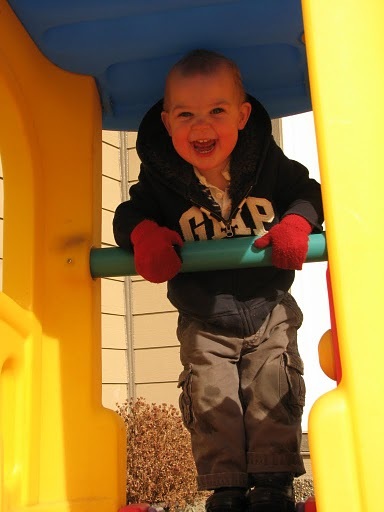
- When a child tries to make a structure in the playground and it falls apart. Don’t fix it for them. I know you are trying to make them feel better but it will only help for a moment. Ask them questions such as “what do you think you could do to fix it?” and “that’s ok, why don’t you try it again and what do you think you could do differently this time?”. Help them but also engage in a conversation.
- When your teenager makes a mistake at school, have a conversation and, as mentioned before, ask them questions about how they can do it better the next time.
These are all simple points, but that is the point, simple changes can teach many things and can make a huge difference to a child’s life.
This could also be the biggest gift you give yourself as you may find that they will see you as the person to come to when they need advice or help, because you aren’t the one always telling them what to do. How many times have you heard a child or teenager whining “I’m not a child anymore” or “you just don’t understand me”. They will talk to you because you don’t treat them like an idiot (even if sometimes they may behave like one) but you show them that you have faith in their ability to figure things out for themselves and the wisdom to support them to do so.
By Tania Swift

When delivering training, the discussion about Self-Directed Play versus Planned Physical Education Classes always comes up and is the subject of some very interesting conversations.
Self-directed play is when children are allowed the freedom to choose what they do and, if possible, where they do it. This is invaluable for young children’s development and growth.
It does not mean, however, that adults do not have an impact on the child’s experience during self-directed play-
The adult should provide an enriching environment, allowing children to spend time in the outdoors or in an interesting and stimulating area.
A child should be challenged and not always told how to do everything, rather be engaged in conversation, being asked questions about their achievements and intentions.
If children feel safe and secure they will also be more likely to take risks and try new things which is important for their development.
Therefore, what can planned physical education classes offer, I hear you ask.
When children take part in planned activity sessions/PE lesson, they will be more likely to develop specific abilities and skills that they need as they grow older. Planned activities also allow for inclusive play and can introduce children to experiences they may not have tried given the choice. It is important to take children’s abilities and interests into account and build from what they already can do, making the activities more engaging, achievable and enjoyable.
The issue of clothing and footwear also always comes up during these conversations.
Many children start school practically incapable of dressing themselves, hence there is a great deal of frustration with the issue of most of the allotted class time being taken up with undressing and dressing.
Never fear, you can get around this frustration:
Think about whether children do really need to wear PE kits/gym gear? Why not start with simply taking off shoes and socks. They are active all the time in their “normal clothing” anyway, why should it be different during lessons?
Alternatively, pair up more able children with less able children so they can help each other during the changing process. What young child doesn’t like being helpful and being given a responsibility?
If they do need to change (school rules, etc.), why not see this as part of the physical development process. They will be developing fine motor skills, body awareness, spatial awareness, balance, coordination, etc. when changing These are all skills required for taking part in more complex games and sport.
Do also remember that the younger a child, the more repetition they require to learn new skills. Therefore, structured activities do not always need to take place in a hall during an allotted Physical Education class. You can repeat anything, anywhere, anytime and all you need is 10 minutes and an engaging, enjoyable activity.
Tania Swift